How to Break Into the Games Industry in 2026: An Evidence-First Guide

The game industry is not one labor market. An engine programmer, animator, producer, localization tester, community manager, and economy designer face different requirements and competition.
The 2026 GDC State of the Game Industry survey describes substantial layoff exposure among more than 2,300 respondents. It does not establish that the industry is “making more money than ever,” that every studio is hiring, or that one group of roles remains safe.
Start with the role, not the dream label.
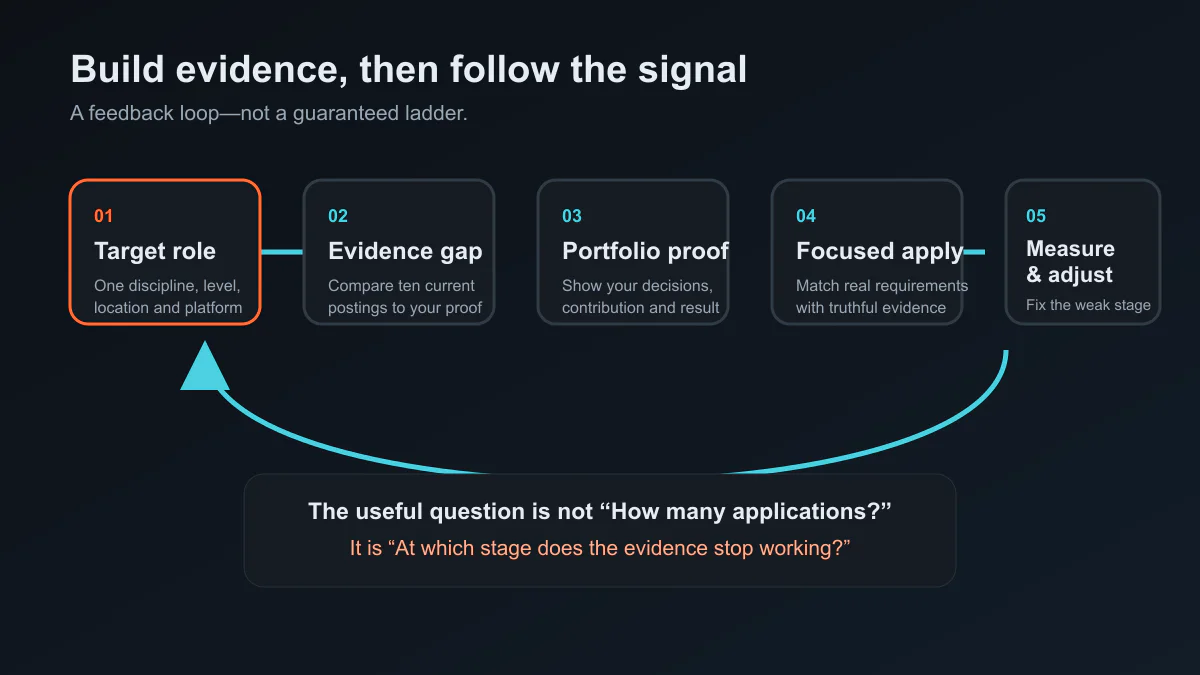
Step 1: define a target discipline
Choose a narrow working hypothesis such as:
- junior gameplay programmer using Unreal and C++;
- environment artist for stylized 3D work;
- associate producer on live mobile games; or
- QA analyst with accessibility-testing experience.
Save ten current postings and record requirements, location, level, pay disclosure, contract type, and posting date. If the sample contains almost no true entry-level roles, that is useful evidence: adjust the target or build missing prerequisites before sending hundreds of applications.
Step 2: use salary evidence with limits
There is no official U.S. “game developer salary” table covering every specialty. BLS categories such as software developers, software QA analysts and testers, or special effects artists and animators include many non-game workers.
Use the closest occupation for context, then compare genuinely similar current studio postings. Label the data period and separate base pay, bonus, equity, benefits, location, hours, and contract length.
Do not rely on invented role bands or assume an entry job is worthwhile regardless of pay and conditions.
Step 3: build attributable evidence
A small project can demonstrate skill if it matches the role. Document:
- the brief and constraints;
- your individual contribution;
- important decisions and alternatives;
- a build, video, code sample, or visual breakdown;
- credits and asset licenses;
- material AI assistance; and
- limitations or unresolved defects.
Do not use confidential employer material or present a tutorial, asset pack, team project, or generated output as solely your work.
Step 4: submit a truthful, readable application
Mirror a posting’s precise terminology only for skills you actually have. Put the most relevant evidence near the top. Follow requested file formats, identify work authorization accurately, and keep dates consistent.
Some employers use automated systems; others do not. Do not hide keywords or write for an imaginary universal bot. If an assessment creates an accessibility barrier, use the employer’s accommodation process where available.
Step 5: protect yourself during tests and offers
Before completing a substantial take-home task, ask:
- how long it should take;
- whether it is paid;
- who will see it;
- whether it will be used in a product;
- what rights you retain; and
- what accommodation process exists.
Verify recruiter domains and company careers pages. Never pay to receive a job, deposit a check and forward funds, purchase equipment from a required private vendor, or send bank credentials as part of an application.
For an offer, read compensation, hours, overtime classification, credits, IP assignment, probation, termination, relocation, and remote-work terms. Get qualified advice where the stakes justify it.
Measure the process
Track applications by exact role and record screening, portfolio review, interview, test, and offer outcomes. After a meaningful sample, change one weak stage. A fixed claim such as “breaking in takes six to eighteen months” cannot predict an individual timeline.
Source notes
- GDC’s 2026 State of the Game Industry summary reports survey scope and layoff responses.
- BLS software developers, QA analysts, and testers provides broader occupation context.
- BLS special effects artists and animators includes video-game work but is not industry-specific.
- DOJ algorithmic-hiring guidance explains disability and accommodation issues.
- IGDA Game Crediting Guidelines provide a contributor-credit reference.
Source check: 27 July 2026.
This article provides general career information, not legal, immigration, financial, or employment advice.
breaking ingame careersportfoliohiring2026applications